Bathroom drain smell in a Malaysian home: causes and what to check
Last updated
Quick answer: In Malaysia, a bathroom drain smell can come from a floor trap that has dried out. Refilling the trap is the first thing to try. If the smell comes back, or the trap is missing or a pipe is damaged, ask a plumber to inspect the drain. Your pipes and the public sewer have different owners.
Get quotes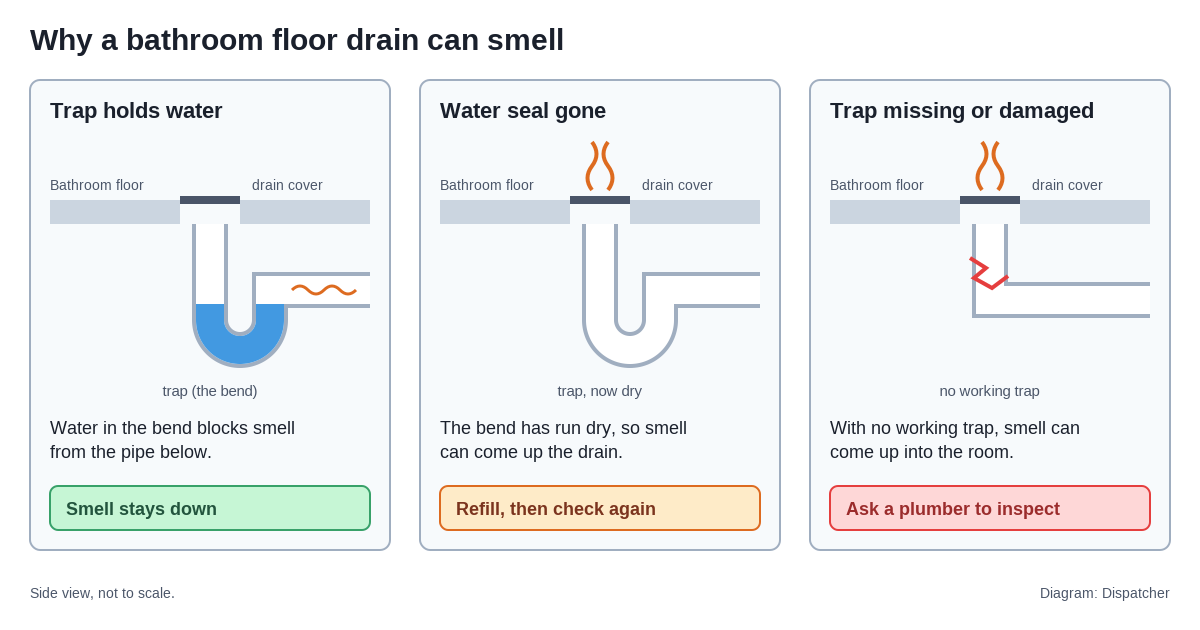
This page is about a smell that seems to come from a bathroom floor drain. It sets out the checks in order and shows where your pipes end and the public sewer begins. Slow or blocked drains have their own guide on blocked toilets and sinks.
A limit before you start: we found no Malaysian authority text that lists the causes of a drain smell. The smell advice below comes from a public building authority in Hong Kong, and we say so each time. It is foreign guidance, not a Malaysian rule.
Why does a bathroom drain smell?
Start with the trap. A trap is the bend in the pipe under a floor drain, and it holds a little water that blocks smell from the pipe below.
Our plumbing fittings guide calls that water the water seal. It lists a dried-out seal, when a drain is rarely used, as a common cause of smell.
The picture at the top shows what a trap can be doing:
- Water in the trap. The seal holds and the smell stays down in the pipe.
- Water gone. The bend has run dry, so nothing blocks the smell.
- Trap missing or damaged. No working seal is left.
Hong Kong's Buildings Department runs a public building safety tip on bathroom smells, in its Care for Your Building series (building safety tip on a smelly bathroom). The tip names a U-shaped trap that is not working well as a possible cause of a bathroom smell. Treat it as plain advice from a foreign building authority, not as a Malaysian rule.
In Hong Kong, the department's guidance says floor drains have to be equipped with traps to prevent foul odour (building safety tip on washing machines).
A washing machine outlet matters too. That tip says that when no trap is installed between the waste pipe and the washing machine outlet, foul odour from the drainage pipes may enter the home (washing machine tip).
What can I check myself, in order?
This is Dispatcher's own check order. Pour water in first, then lift the cover and clear what you can see, then look at the trap. If the smell comes back, stop and call a plumber.
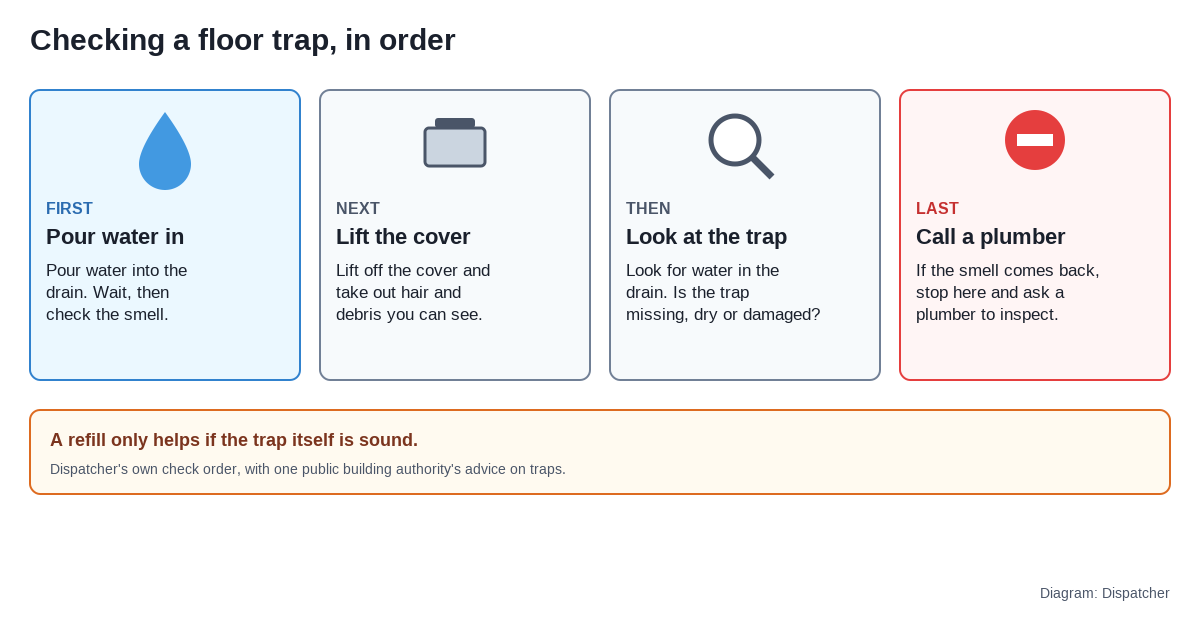
First, pour water in and wait. Fill the trap with water, wait a little, then smell again. For U-shaped or bottle traps, Hong Kong's Buildings Department advises pouring half a litre of water into the drain outlets once a week to keep odour out.
That advice is about prevention. Pouring water in now is Dispatcher's own test: if the smell goes, the trap had probably run dry.
Next, lift the cover and clear what you can see. Take off the drain cover and pick out hair and debris. If water also drains slowly, read our guide to a blocked toilet or sink.
Then look at the trap. Look for water standing in the drain. If it is dry again after you poured water in, you cannot see a trap, or a part looks cracked, stop and read the next steps.
If traps are missing, or the drainage pipes are damaged or leaking, the department says to arrange a drainage inspection with a professional.
Last, stop if the smell comes back. A refill only helps if the trap itself is sound. If the smell returns after a refill, stop checking and ask a plumber to inspect the drain.
This page does not recommend a drain cleaner or a cleaning mix. We found no Malaysian source for one.
Is it my pipes or the sewer?
The owner looks after the pipes on the house side. IWK, the sewerage operator, says it maintains the public sewer pipes beyond them (IWK, connected sewerage).
For the house side, section 65(2) of the Water Services Industry Act 2006 (Act 655) makes the owner, management corporation or occupier solely responsible for the maintenance, refurbishment or replacement of the internal sewerage piping. The same section also covers common internal sewerage piping, which matters in a condo or other strata building.
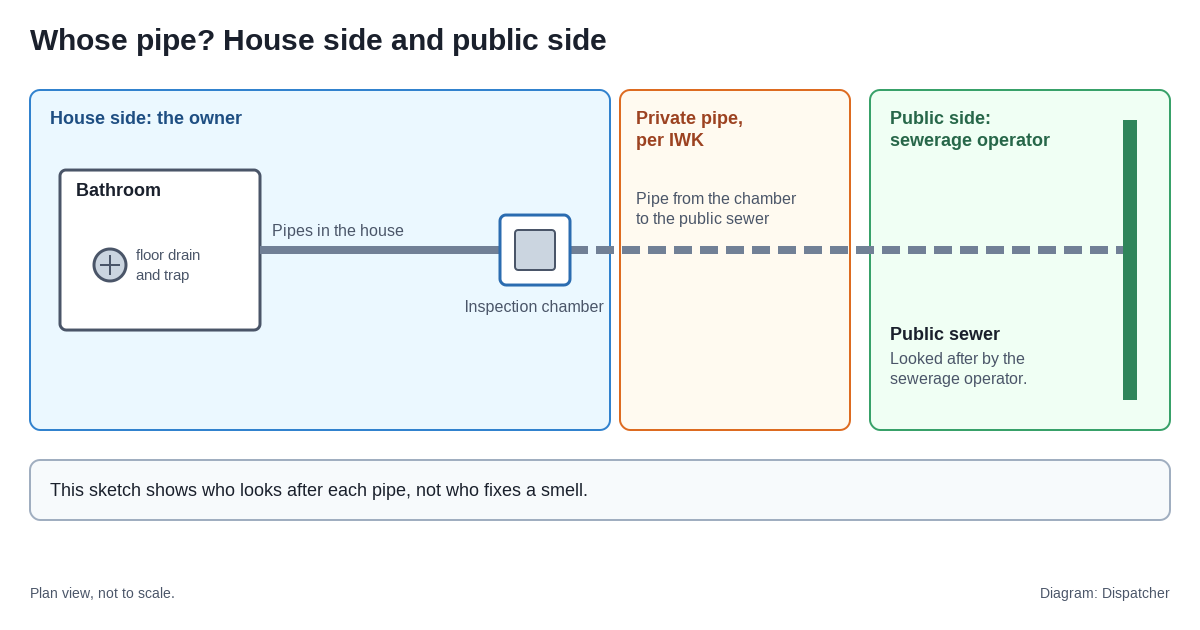
IWK explains the outside end. Its connected sewerage page describes an inspection chamber outside the house that links the toilet, bath and kitchen outlets to the public sewer. A bungalow may have more than one chamber (IWK, connected sewerage).
On that page, IWK also says the pipe from the chamber to the public sewer is private (IWK, connected sewerage).
If a private pipe is blocked, IWK says customers have the option to engage private contractors or plumbers to clear it (IWK, clearing of blockage).
These pages say who owns each pipe. They do not say who fixes a smell, and we found nothing that says the sewerage operator comes out for one. For a smell inside your bathroom, start with the checks above.
When should I call a plumber?
Call a plumber if the smell comes back after a refill, if the trap is missing or damaged, or if you see signs of a leak.
- The smell returns after you refill the trap.
- The trap is missing, or you cannot find one under the cover.
- A part looks cracked, or you can see damage or a leak. The Hong Kong tip lists damage or leakage in the drainage pipes as a reason to arrange an inspection, and our guide to a leaking pipe covers what to do about water.
- The smell comes with a slow drain. See the guide to blocked toilets and sinks.
Tell the plumber which drain smells, when you notice it, and what you have already tried. If you want to see how the water side of the house fits together, read how the water pipes in your home work.
We found no Malaysian rule that says whether a drain check needs a plumber's licence or permit, so we do not say either way. Ask your plumber, and read how to check a plumber's SPAN permit. Dispatcher has not checked listed businesses' licences yet, so check them yourself.
In a condo, tell your management office too. Section 65(2) of Act 655 covers common internal sewerage piping, which can be shared with other units.
Get quotes on Dispatcher
Free for homeowners. Describe the job in one short form and we pass it to matched local contractors, who contact you directly.
Dispatcher does not do the work. In your request, say which bathroom smells, when you notice it, and what you have tried.
Sources
- Hong Kong Buildings Department, Care for Your Building, building safety tip on a smelly bathroom, from its "Check your drains" series: foreign public guidance, page last revised 2 November 2022, read 25 November 2026.
- Hong Kong Buildings Department, Care for Your Building, building safety tip on installing a washing machine properly, from its "Check your drains" series: foreign public guidance, page last revised 2 November 2022, read 25 November 2026.
- IWK, connected sewerage page: the inspection chamber and private versus public sewer pipes, read 25 November 2026 with certificate checks off.
- IWK, clearing of blockage page: private blockages and private contractors or plumbers, read 25 November 2026 with certificate checks off.
- Water Services Industry Act 2006 (Act 655), section 65, "Duty to operate and maintain private sewerage system, etc.", hosted by mylaw.my: subsection (2), read 25 November 2026.
This page gives general information. Advice and rules change, so check the current position with IWK, SPAN and your management office before you rely on it.
Frequently asked questions
Why does my bathroom floor drain smell?
Start with the trap under the drain. It is a bend that holds a little water to block smell from the pipe below, and it can run dry, go missing or be damaged. Hong Kong's Buildings Department lists a trap that is not working well as a possible cause.
Can pouring water fix a smelly drain?
Pouring water can help if the trap is sound but has run dry. For U-shaped or bottle traps, Hong Kong's Buildings Department advises half a litre of water into the drain outlets once a week. If the smell returns after a refill, stop and ask a plumber to inspect the drain.
What if the trap is missing or damaged?
Ask a plumber to inspect the drain. Hong Kong's Buildings Department says to arrange a drainage inspection with a professional if traps are missing, or if drainage pipes are damaged or leaking. It also says floor drains have to be equipped with traps to prevent foul odour.
Is a smell from the washing machine outlet the same problem?
It can be a similar problem. Hong Kong's Buildings Department says that if no trap is installed between the waste pipe and the washing machine outlet, foul odour from the drainage pipes may enter the home. Ask a plumber to look at it.
Who looks after the pipe from my house to the sewer?
IWK's connected sewerage page says the pipe from the inspection chamber to the public sewer is private. Section 65(2) of the Water Services Industry Act 2006 makes the owner, management corporation or occupier solely responsible for the internal sewerage piping. We found no source that names who maintains that private pipe.
When should I call a plumber?
Call a plumber if the smell returns after a refill, the trap is missing or damaged, or you see a leak. Dispatcher has not checked listed businesses' licences yet, so check any plumber yourself. Hong Kong's Buildings Department says to arrange a drainage inspection with a professional if traps are missing.
Related guides
- Blocked toilet or sink: slow draining, and what to do before you call.
- Plumbing fittings explained: the names of traps, joints and valves.
- Leaking pipe at home: what to do when water shows.
- How to check a plumber's SPAN permit: what to ask before work starts.
Next step
Written by the Dispatcher editorial team from the sources above. See how Dispatcher works.
Got a smell that keeps coming back? Get quotes
Last updated: 25 November 2026