Adding a new power point at home: what to know first
Last updated
Quick answer: Adding a power point is new wiring. It is a job for an electrical contractor registered with ST, the energy regulator. They first check which circuit can safely take another socket. Then they extend that circuit or run a new one from the DB box. An extension plug does not add that capacity.
Get quotes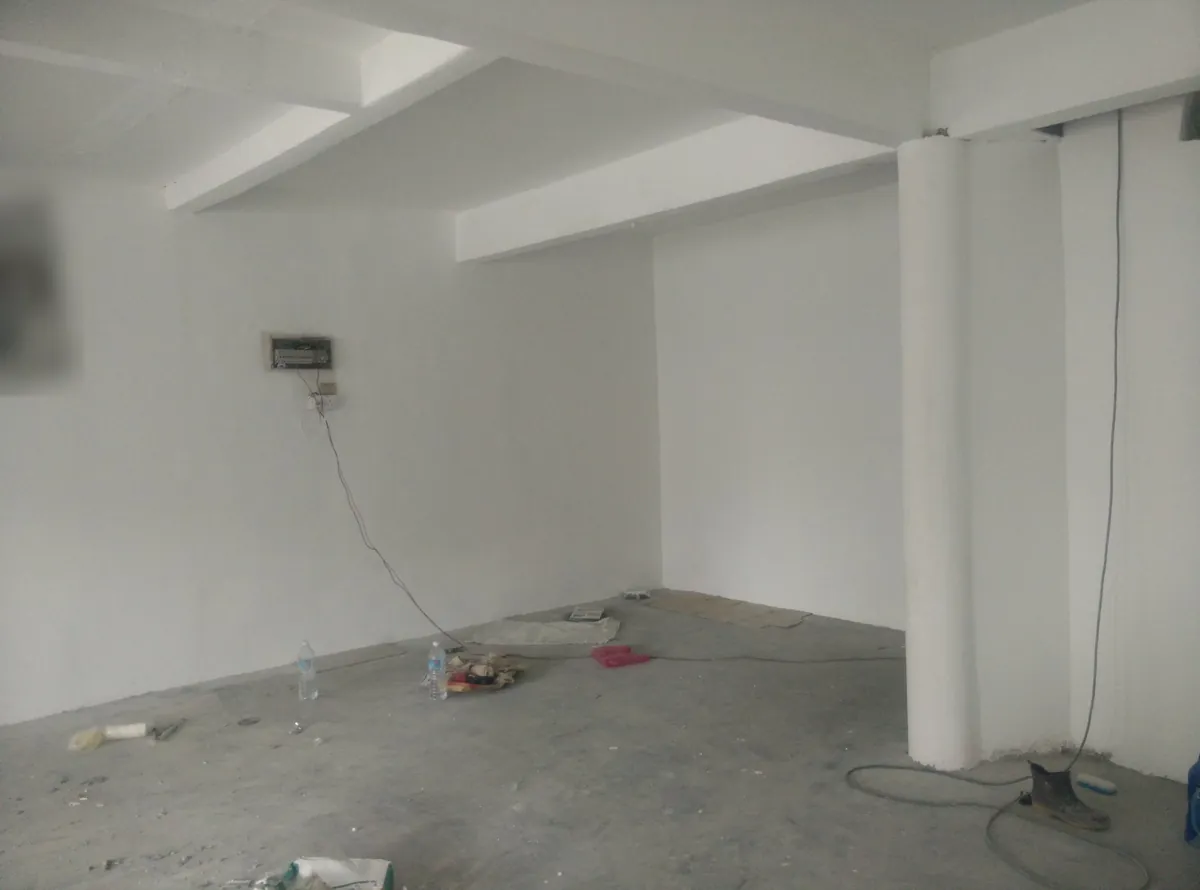
Temporary site power during a house renovation in Selangor: a small DB box, a temporary socket and a loose cable. This is not a finished power point.
You need one more plug in the living room, the study or the kitchen. An extension plug looks like the quick fix, but a proper new point is a different job.
This guide covers how an electrician adds a point, what they check first, and what to ask for in writing. It does not teach wiring, because that is not a homeowner job.
Why not just use an extension plug?
An extension plug adds more holes, not more capacity. Everything plugged into it still draws power through one wall socket and the wiring behind it.
ST (Suruhanjaya Tenaga, the Energy Commission) is Malaysia's energy regulator. Its safety tips booklet tells homeowners not to overload a socket with too many connections.
The Malaysia Energy Literacy Program (MELP) gives a sharper warning. It says using high-powered appliances together in one extension can damage wiring or cause short circuits.
Picture the kettle, the iron and the rice cooker on one board. That is the pattern to avoid.
An extension is fine for something small, like a phone charger. ST's booklet adds a simple habit: switch off the socket when you are not using it.
If you keep reaching for a longer extension, you need another point. If a socket smells of burning or sparks, stop using it and read our guide on a burning smell or sparking socket.
Two ways an electrician adds a point
An electrician either takes the new point from an existing socket circuit, or runs a new circuit from the DB box. The choice depends on how much that circuit already carries.
The DB box is the distribution board. It holds the breakers (MCBs) and the RCD, the safety switch that cuts power when current leaks.
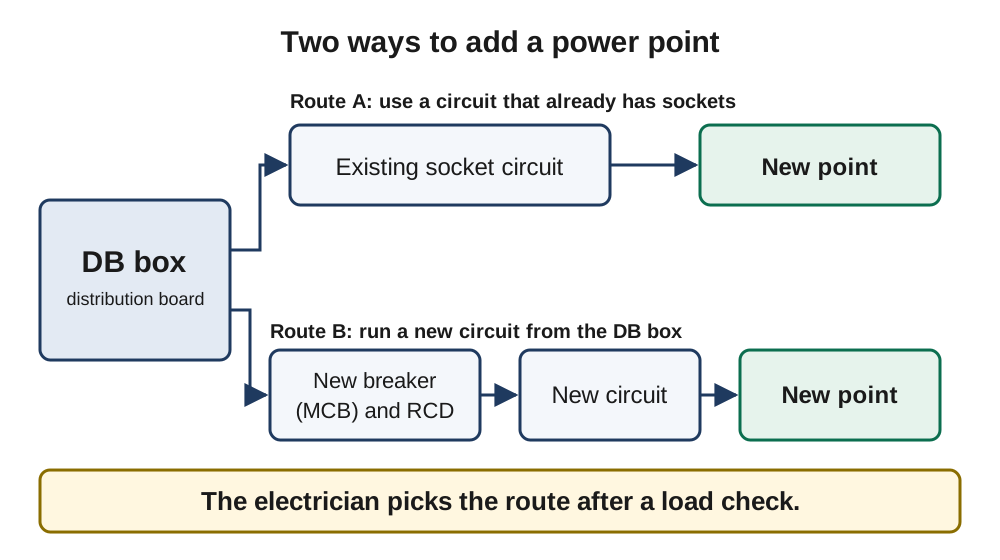
Route A uses a circuit that already feeds sockets nearby. It only works if that circuit has room for more.
ST's domestic wiring guideline shows socket circuits wired as a ring or as a radial line. A radial line is one cable run out from the board.
The same guideline says the number of sockets depends on the circuit type and the largest floor area it serves.
Route B starts at the DB box. The electrician fits a new breaker and RCD, then runs a new circuit to the new point. It is the route when the old circuit is already busy.
Either way, the electrician has to know your total load. TNB, the power utility, says in its home guide for EV chargers that electricity overload can cause frequent power trips or outages.
The same page says changes to TNB's meter or fuse are strictly prohibited.
What they check before adding it
Before they open a wall or fit a cable, an electrician checks the circuit, the load, the cable size, and the earth and RCD protection.
The circuit. They find which circuit the new point would join and how many sockets it already feeds.
The load. They ask what will plug in. A phone charger and a heater are very different. An air-conditioner is a separate job, covered in our aircond power point guide.
The cable. Table 8.2 of ST's domestic wiring guideline gives 2.5 mm² copper as the minimum size for a 13A socket outlet circuit. Your electrician picks the actual cable from the circuit and the route.
Spare room. The same guideline asks for spare capacity on socket circuits. A new point should not use up the last of it.
Earth and RCD. They look at the earth and RCD protection for the new point. The guideline also sets a minimum size for the earth (protective) conductor.
ST's booklet says to test your RCD at least once a month. Our guide shows how to test an RCD.
Surface trunking or inside the wall
Surface trunking is a cover that runs along the outside of the wall. Concealed wiring goes inside the wall. You are choosing between a visible cover and a wall that has to be opened and repaired.
| Surface trunking | Inside the wall | |
|---|---|---|
| What you see | A cover along the wall | Only the new socket plate |
| Work on the wall | Fixing the cover | Opening a channel, then repair and repaint |
| Suits | Walls that are hard to open, or a rented home | A clean finish, where the wall can be opened |
| Watch out for | Visible lines on the wall | A hidden cable someone may drill into later |
ST's guideline says surface wiring must be protected by conduit or trunking. For wiring inside a wall, it sets zones where cable may run and keeps upright runs away from door and window frames. Your electrician applies these rules.
Ask for a photo or a simple sketch of the cable route before the wall is closed. Then nobody drills into it later.
Landlords and building managers may find surface trunking easier to accept, because the wall stays whole. Ask them first.
Plan your new points
Decide where each point goes and what will plug in before the electrician comes. Quotes then compare like for like, and one visit can cover every point you want.
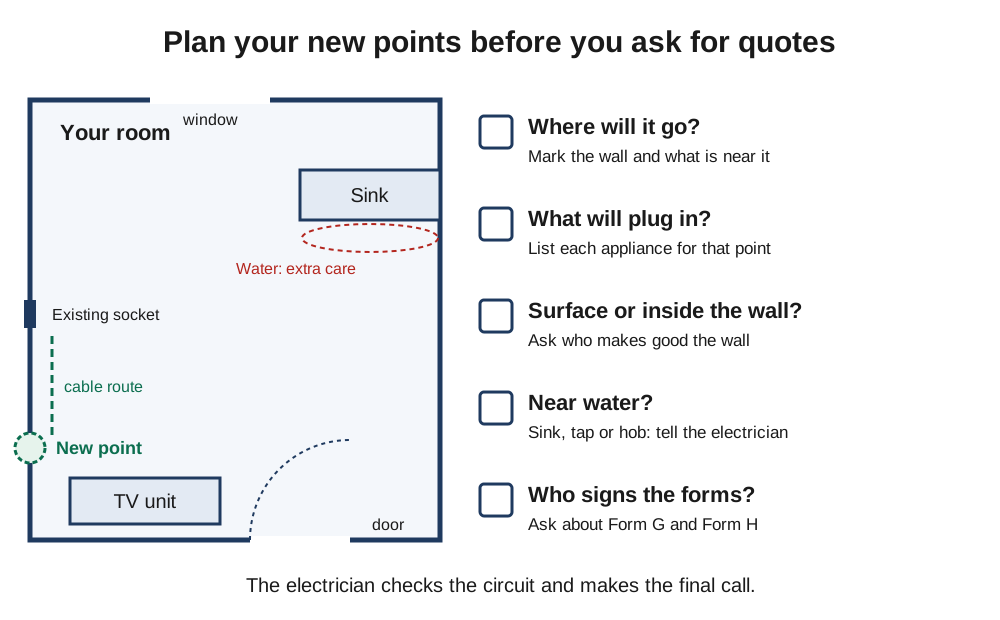
Walk through each room and think a few years ahead. A second desk, a new TV wall or a fridge that may move all change where points should go.
For each point, write down what will plug in. A lamp is a small load, but a kettle, an iron or a heater is a big one. Tell the electrician so the circuit can match.
Mark the spots on the wall with masking tape and take a photo. Do not open a socket plate or the DB cover yourself.
Kitchens and wet areas need extra care. ST's guideline says a socket must be at least 300 mm sideways from the edge of a sink or tap, to reduce splashing. It also keeps sockets and accessories out of the space above a gas or electric hob.
Tell the electrician where the sink and taps are. They apply the rule on site.
Who can do it and the forms
For new or added wiring at home, ST says to appoint an electrical contractor registered with ST. You can search ST's public list before you say yes.
ST's page for new, extra or rewired home wiring says consumers need to contact an electrical contractor registered with the Energy Commission. The public list of registered electrical contractors sits on ST's ECOS system.
Dispatcher has not checked the licences or registration of listed businesses yet, so the check is yours. Our guide on how to check an electrical contractor shows the steps.
ST's safety tips booklet adds a check. It says to confirm a contractor's ST registration by looking at the Competent Person Identification Card (CPIC).
The forms after added wiring
On its ECOS guideline page, ST names Form G and Form H. It says a wiring electrician fills in Form G. An authorised wiring tester fills in Form H, and the applicant keeps the signed originals.
Ask your contractor whether both forms apply to your job and who files them. Our guide on Form G and Form H explains each one. Rules change, so check the current requirement with ST before work starts.
What to ask for in writing
- Where each new point goes, and how many.
- Whether it comes off an existing circuit or from a new breaker at the DB box, and why.
- Surface trunking or inside the wall, and who repairs and repaints.
- The firm's ST registration, so you can look it up on ECOS.
- Whether Form G and Form H apply, and when you get copies.
- What the quote leaves out.
We print no electrical prices here. A written quote is the way to a real price, and our guide on what affects an electrician's quote lists the factors.
Renting or in a condo
Ask first, in writing. A tenant needs the landlord's yes, and a condo owner should check with the management office before any wiring starts.
If you rent, message the landlord before you book anyone. Say what you want, where, and that a registered electrical contractor would do it. Keep the reply.
I would like to add one extra plug point in the living room, next to the TV wall. A registered electrical contractor would do the work. Can you confirm in writing that this is fine, and whether you prefer surface trunking or wiring inside the wall?
In a condo, the JMB or MC (the joint management body or management corporation that runs the building) may have its own rules for works inside units. Ask the management office whether you must give notice or fill in a form.
This is general information, not legal advice. Your tenancy agreement and the building's house rules decide.
Get quotes on Dispatcher
Free for homeowners. Describe the job in one short form and we pass it to matched local contractors, who contact you directly. Have a photo of your DB board ready to send to the matched contractors when they contact you.
Take that photo with the cover closed. In the form, say where the point goes, what will plug in, and whether you rent. Our guide on booking an electrician home visit shows what else to prepare.
Dispatcher does not do the work. It has not checked the licences of listed businesses yet, so check each one on ECOS first. You can also browse electricians for small home jobs in KL and Selangor.
Related guides
- What affects an electrician's quote at home
- Aircond power point: what wiring an air-conditioner needs, a separate job from an ordinary plug.
- Burning smell or sparking socket: what to do now
- How to check an electrical contractor before you hire, with ST's public list.
Sources
Written by the Dispatcher editorial team from the sources below. See how Dispatcher works.
Rules can change, so check the current position with each body named here.
- Suruhanjaya Tenaga (ST), appointing a registered electrical contractor for new or added wiring at home.
- List of registered electrical contractors (ECOS), published by ST.
- ECOS wiring registration guideline page, ST, for Form G and Form H.
- Domestic wiring guideline (Garis Panduan Pendawaian Elektrik Pepasangan Domestik) from ST: socket circuits, Table 8.2 cable sizes, wiring zones, distance from sinks.
- ST's Tip Keselamatan dan Kecekapan Tenaga booklet on sockets and plugs, the RCD test and the CPIC card.
- Malaysia Energy Literacy Program (MELP) page on electrical and gas safety.
- TNB's customer guide for a home EV charger, for the overload, meter and fuse lines.
- Wikimedia Commons file page for the photo, taken by Frostpolar.
Frequently asked questions
Can I add a power socket myself?
No. A new socket is new wiring, and ST tells homeowners to appoint an electrical contractor registered with ST for new or added wiring at home. Do not open a socket plate or the DB cover to try it. Send a photo of the closed board to the electrician instead.
Do I need a new circuit from the DB box for one socket?
Not always. The electrician decides after a load check. If a nearby socket circuit has spare capacity, the new point can join it. If that circuit is already busy, or the new point will carry a heavy appliance, they may run a new circuit from the DB box with its own breaker.
Is it safe to run the kettle and iron on one extension plug?
Avoid it. MELP warns that using high-powered appliances together on one extension can damage wiring or cause short circuits. ST's safety tips also say not to overload a socket with too many connections. Use separate wall sockets for heavy appliances, and ask an electrician to add a point if you keep running short.
I rent, can I ask for an extra plug point?
You can ask, but get the landlord's yes in writing before any work starts. Wiring added to the wall is hard to take with you, so the landlord should agree to the plan. Ask about surface trunking if opening the wall is a worry. A registered electrical contractor should still do the work.
Do I get any paperwork after new wiring?
Ask about Form G and Form H. ST says a wiring electrician fills in Form G, an authorised wiring tester fills in Form H, and the applicant keeps the signed originals. Ask your contractor whether they apply to a single new socket, and check the current rule with ST.
Has Dispatcher checked the electrician's registration?
No. Dispatcher has not checked the licences or registration of listed businesses yet. Search the firm on ST's public list of registered electrical contractors on ECOS before you agree to any work.
Need another plug point? Get quotes
Last updated: 16 November 2026